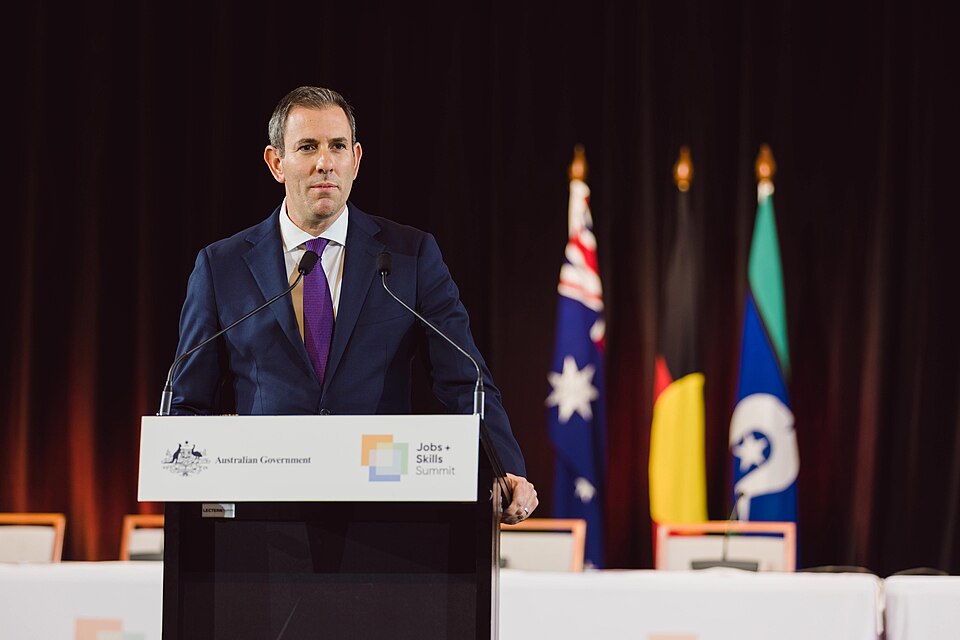
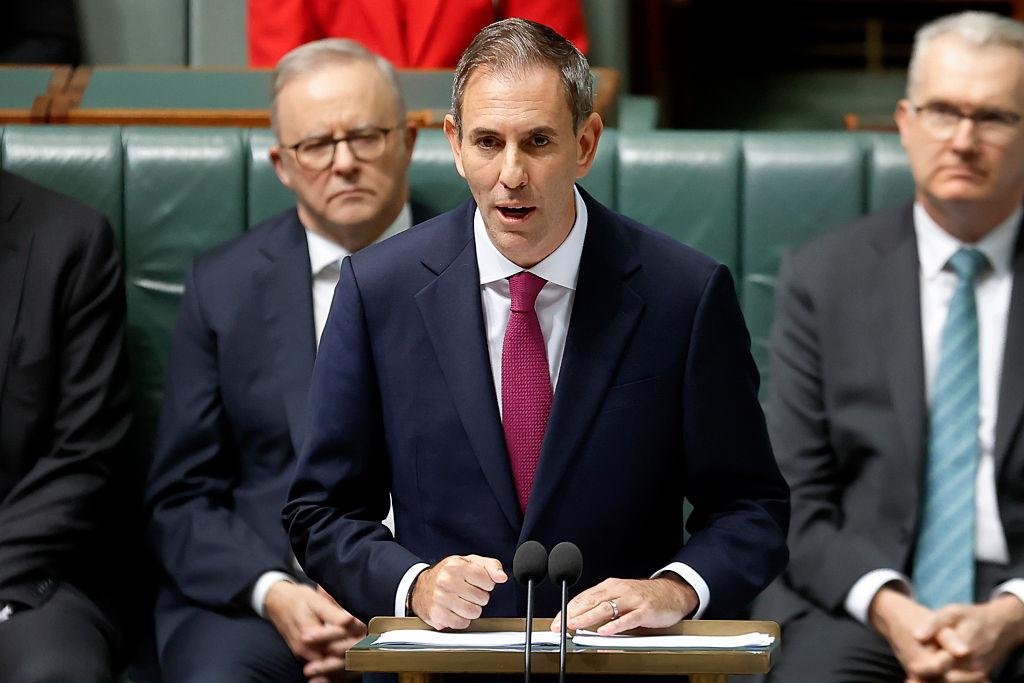
Jim Chalmers at the Jobs and Skills Summit, September 2022. File photo: Commonwealth of Australia, Department of the Treasury, via Wikimedia Commons. CC BY 4.0. Social preview cropped to 1200 x 630.
If you run your business through a discretionary trust, this is worth paying attention to.
The Business Council of Australia says Labor’s proposed 30% minimum tax on discretionary trusts could cost Australian businesses about $4 billion in the first year.
Its estimate includes roughly $1.7 billion in additional annual tax and $2.3 billion in first-year compliance costs. That’s the combined cost the council is warning about, including the expense of getting businesses ready for the changes. 1
The proposal hasn’t become law. The intended start date is 1 July 2028, so the final rules still depend on what gets through parliament. 2
Treasurer Jim Chalmers says the reform is about fairness. When introducing the legislation on 14 October, he said:
“This is all about better aligning the tax treatment of income from assets and income from work.”
The government argues that discretionary trusts give some people opportunities to reduce their tax that aren’t available to someone earning a wage. It also acknowledges that trusts have legitimate uses, including succession planning and asset protection. 3
That’s where this gets more complicated for business owners.
A structure put in place to support a family business can involve years of planning. Changing it means getting advice, reviewing documents and working through the consequences for the people involved.
The government says more than 90% of small businesses would be unaffected in any given year. Treasury’s figures show around 350,000 active small businesses operated through discretionary trusts in the 2022 to 2023 financial year, with around 140,000 of those not expected to pay additional tax or need to restructure in any given year. 4
That still leaves a substantial number of owners who need to work out where they stand.
The Coalition has committed to opposing the changes. Angus Taylor said on 16 November:
“We will repeal Labor’s toxic taxes on trusts, on capital gains, on negative gearing.” 5
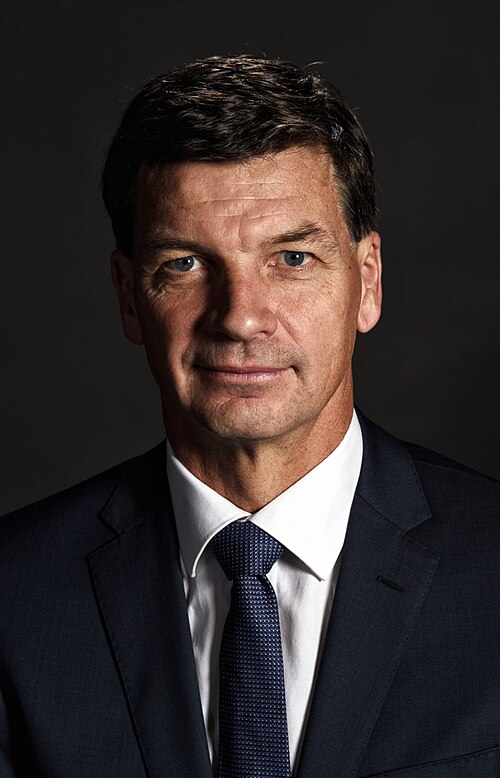
Angus Taylor, pictured in 2018. Photo credit as listed: Department of Climate Change, Energy, the Environment and Water 2021, via Wikimedia Commons. CC BY 4.0.
For an owner trying to plan ahead, the immediate concern is what the proposed rules would mean for their own business.
Under the proposal, the 30% minimum tax would apply at the trustee level to taxable income. Eligible non-corporate beneficiaries would receive a non-refundable tax credit for the trustee tax attributable to their share. The effect would depend on the trust, its income and the beneficiaries’ circumstances. 2
There are also proposed ways for eligible trusts to remain outside the minimum tax or move to another structure.
These include a three-year window for restructuring rollover relief from 1 July 2027, and an option for eligible existing trusts to elect to make fixed distributions to pre-nominated beneficiaries. 2
Penny Wong defended those arrangements in the Senate on 16 November:
“Our reforms to trusts include expanded options to limit or eliminate restructure costs for small businesses and others using discretionary trusts.” 6
Those options need to be clear enough for owners and their advisers to compare properly.
The Law Council of Australia has raised that concern. It warns that taxpayers could face significant, potentially irreversible decisions before the full legislative framework is complete, with important details still dependent on further legislation or guidance. 7
It’s a reasonable concern. Before changing a structure that affects your business and family, you need to understand what you’re signing up for.
If your business operates through a discretionary trust, ask your accountant to put some figures against the proposal. What would the tax position look like? What would changing the structure cost? How would the available options affect the way the business operates?
There’s time to work through it. The useful thing now is to understand your position as the legislation develops.
Business owners deserve a clear explanation of what they’ll have to do, what it will cost and why the change is necessary.
Does your business operate through a trust? Have you looked at what these changes could mean for you?
General information about proposed legislation. Get advice from a registered tax adviser about your own circumstances.
Founder of Fireside Business Advice. Adam built Fireside to help men grow in business and in life, surrounding them with high-calibre operators, trusted advisors, and a community that holds a higher standard.
If this kind of thinking resonates with you, Fireside can connect you with pre-qualified professionals who operate at this level. Whether you need strategic advice or want to join our specialist network, we'd like to hear from you.