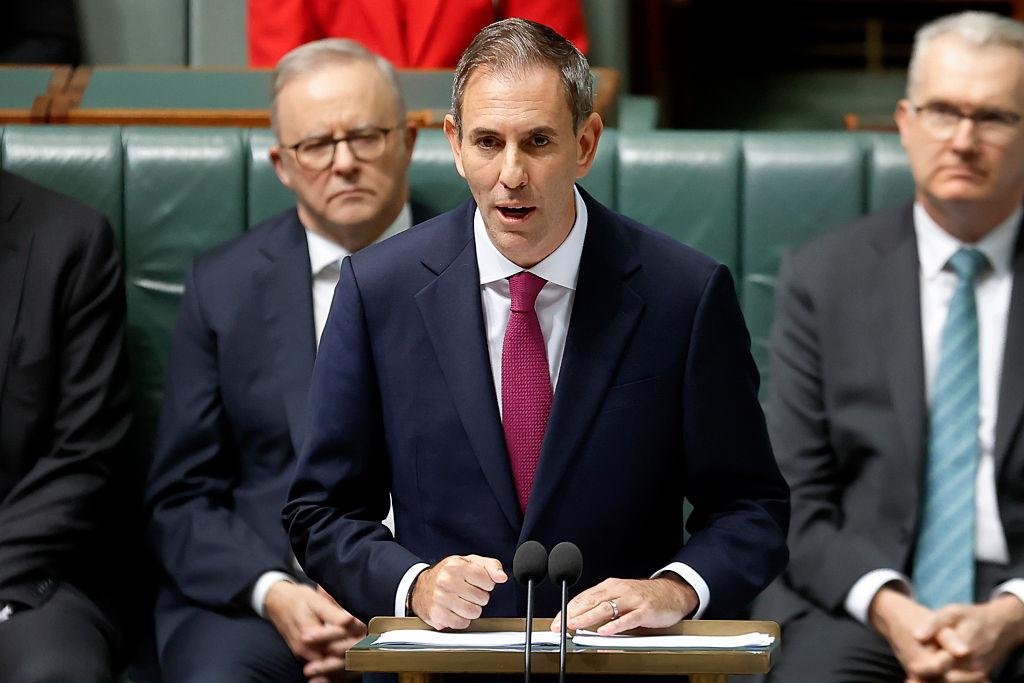
The Albanese Government has been forced into an embarrassing reversal over the Australian Taxation Office's proposed credit card payment restrictions, following a backlash from small-business owners and industry groups.
Treasurer Jim Chalmers has announced that the ATO will continue accepting direct credit card payments until 30 June 2027, delaying restrictions originally scheduled to begin on 1 December 2026. The
Treasury announcement of 9 October 2026 confirms that the government will provide transitional funding to cover the extension.
The decision follows the introduction of new card-surcharging rules on 1 October, which generally prevent Australian businesses from passing card-processing costs directly to customers through separate surcharges.
The controversy has exposed an uncomfortable question for policymakers: if the ATO cannot afford to absorb credit card processing fees, how are Australia's small businesses expected to manage them?
Why did the ATO want to stop accepting credit cards?
The issue began with the Reserve Bank of Australia's (RBA) surcharge reforms. From 1 October 2026, the RBA removed its prohibition on “no-surcharge” rules for the designated card networks — eftpos, Mastercard and Visa — allowing those networks to ban surcharging.
The card networks then implemented their own no-surcharge rules. As the
RBA's explanation of the reforms makes clear, the RBA regulates the designated networks rather than merchants directly; the networks are responsible for their rules and
compliance. American Express, UnionPay and PayPal also decided to remove surcharging, although they are not currently subject to the RBA's formal regulation.
The objective was straightforward: eliminate confusing additional charges and make prices more transparent for consumers.
However, removing surcharges does not eliminate the costs associated with processing electronic payments.
Banks and payment providers continue to charge merchants for processing transactions. Those costs must ultimately be recovered somewhere, whether through business margins, higher prices or cheaper payment arrangements.
For the ATO, absorbing those processing fees would reportedly cost taxpayers about $200 million annually, according to
ABC reporting dated 9 October 2026.
Rather than absorb those expenses, the ATO proposed discontinuing direct credit card payments.
For businesses relying on credit cards to manage taxation obligations, that created an immediate concern.
Credit facilities can provide additional time to settle bills, allowing businesses to manage short-term cash flow while waiting for customer invoices to be paid.
Removing that option could leave some businesses with fewer ways to manage their financial obligations.
Angus Taylor criticises the government's response
Opposition Leader Angus Taylor has been particularly critical of the decision.
Responding to the government's announcement, Taylor said:
"Today they've decided they're going to screw them tomorrow, or at least in nine months' time."
Taylor argued that postponing the restrictions did little to address the underlying problem facing business owners.
The Coalition has called for credit card payments to remain available, arguing that access to flexible payment methods is particularly important for small businesses managing cash flow.
The government's position is that the extension provides time for consultation and the development of alternative payment arrangements.
However, the decision also raises questions about how the costs of electronic payments should be distributed across the economy.
The bigger problem for Australian small businesses
For many businesses, card-processing fees have traditionally been a relatively straightforward expense to manage.
A customer pays by card, the payment provider charges a processing fee, and the business either absorbs the expense or passes it on through a surcharge.
Under the new rules, businesses generally no longer have the option of charging that separate card surcharge.
That leaves several alternatives: absorb the costs, increase prices, negotiate lower merchant fees or encourage customers to use alternative payment methods.
For large businesses processing millions of dollars in transactions, negotiating competitive merchant rates may be relatively straightforward.
Smaller businesses often have less bargaining power.
Consider a business processing $100,000 per month in electronic payments.
At an illustrative merchant fee of 1.5%, processing costs amount to $1,500 per month, or $18,000 annually.
That is a substantial expense for a business operating on relatively narrow margins.
And unlike a surcharge, which makes the payment-processing cost visible to customers, absorbing the expense within existing pricing can make it considerably less obvious.
Are customers actually saving money?
There are genuine benefits to removing card surcharges.
Customers can see the advertised price without discovering an additional fee when they reach the payment terminal.
It also removes some of the complexity surrounding different card types, payment providers and surcharge calculations.
The RBA has argued that the previous surcharge system was no longer operating as intended. Alongside enabling the networks' no-surcharge rules, its reform package includes lower interchange fee caps and greater transparency requirements designed to reduce merchant costs.
Nevertheless, the reform does not guarantee that every consumer will ultimately pay less.
If businesses increase their prices to recover processing expenses, customers may still bear some of those costs indirectly.
In some cases, customers paying by cash could also contribute to covering card-processing expenses through higher general prices.
The difference is that those costs would be incorporated into the price rather than identified separately at the point of payment.
What happens after June 2027?
The government's decision provides a temporary reprieve for businesses that rely on credit cards to pay taxation liabilities.
It does not necessarily resolve what happens after the transition period, or who should ultimately bear the cost of processing those payments.
Under the arrangements announced by Treasury, direct ATO credit card payments are expected to cease after 30 June 2027, but third-party credit card payment services will remain available. Treasury also says the ATO will continue to offer other free and low-fee payment methods, including debit card and bank transfer. This is a change to the direct payment channel, not the removal of every way to pay tax using a credit card.
Businesses considering a third-party service should check its fees, processing times and terms before relying on it. Continued access to a credit card payment option does not mean that option will be free or carry the same costs as paying the ATO directly.
The government has asked the ATO to consult on support for taxpayers experiencing financial hardship and alternative arrangements for businesses and individuals unable to pay by other methods. That consultation matters, particularly for owners who use credit facilities to bridge the gap between a tax deadline and incoming customer payments.
The broader question remains: should banks and payment providers bear more of the processing costs, should businesses absorb them, or should customers pay through surcharges or higher overall prices? During the ATO's extension, transitional government funding means taxpayers are covering the cost. For private businesses, removing a separate surcharge does not make the underlying expense disappear.
Lower fees could reduce the burden, but businesses still need to decide how to manage the costs that remain. Absorbing them affects margins; incorporating them into general prices can spread them across customers, including those who do not pay by card. Allowing a separate surcharge would make the cost more visible, but runs against the new card-network rules unless an exception applies.
The delay gives small businesses time to prepare. A durable solution needs to address both access to workable payment methods and a fair allocation of processing costs — rather than simply moving the expense from one party to another.
Join the Fireside Discussion
Should banks be forced to absorb card-processing costs, or should businesses be allowed to pass them on to customers?
Share your view with other business owners in the Fireside community.
Connect with Fireside for free and join the conversation.