
The Green Steel Delusion: A Critical Analysis of Hydrogen-Based Steelmaking
The global push toward 'green steel' production represents one of the most economically reckless proposals in modern industrial policy. This white paper examines the core technological and economic flaws.
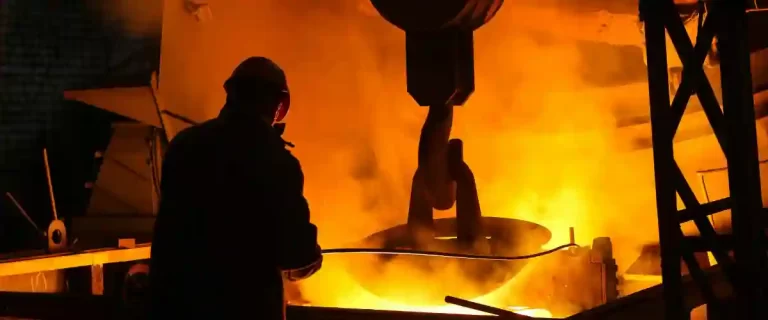
Written by Jedidiah Hansen
Executive Summary
The global push toward "green steel" production represents one of the most economically reckless proposals in modern industrial policy. Marketed as an environmental necessity, the concept of replacing traditional steelmaking processes with hydrogen produced from renewable-powered electrolysis fails on every fundamental metric: economic viability, energy efficiency, scalability, and even environmental impact. This white paper examines the core technological and economic flaws that render green steel not merely impractical but potentially catastrophic for manufacturing economies.
Introduction: The Green Steel Narrative
Green steel has emerged as a flagship policy initiative across Western economies, particularly in Europe and Australia. The concept is straightforward: replace carbon-intensive coal or natural gas in steel production with "clean" hydrogen produced through water electrolysis powered by renewable energy sources. The steel industry accounts for approximately 7-9% of global CO₂ emissions, producing roughly 1.9 billion tonnes of crude steel annually. Proponents argue this transition is essential to meeting climate targets and decarbonizing heavy industry.
However, beneath the appealing rhetoric lies a fundamental disconnect between political aspiration and economic reality. Green steel is not an environmental solution—it is a subsidy mechanism masquerading as climate action, one that threatens to devastate the very industries it purports to save.
The Fundamental Cost Problem
The central flaw in the green steel proposition is brutally simple: hydrogen produced via electrolysis is prohibitively expensive compared to conventional energy sources used in steelmaking.
Energy Cost Comparison
Current market data reveals the stark reality. According to BloombergNEF's 2024 Hydrogen Levelized Cost Update, the production costs of green hydrogen range from $3.50 to $12 USD per kilogram, depending on renewable energy costs and electrolyser efficiency, with most projects falling within the $8-12 USD/kg range. At an energy content of approximately 33 kWh per kilogram, this translates to $0.24-0.36 USD per kWh of usable energy.
By contrast:
- Natural gas: Currently trading at $2-4 per MMBtu in most markets, equivalent to approximately $0.006-0.012 USD per kWh
- Coal: Approximately $0.005-0.008 USD per kWh for industrial users in coal-producing regions
This means green hydrogen costs 30-50 times more per unit of energy than natural gas, and roughly 50 times more than coal. These are not marginal differences that might be overcome through economies of scale or technological refinement. These are order-of-magnitude disparities that fundamentally undermine any business case for adoption.
The Scalability Crisis
Theory meets reality at ThyssenKrupp Steel in Duisburg, Germany—one of the world's largest integrated steel plants producing approximately 11 million tonnes annually. When the company evaluated conversion to green hydrogen, the numbers revealed an insurmountable obstacle.
ThyssenKrupp's Duisburg facility consumes approximately 55 TWh of energy annually. Producing this energy as green hydrogen would require roughly 1.7 million tonnes of hydrogen (at 33 kWh/kg).
According to the IEA, global electrolysis capacity in 2023 was approximately 0.7 GW, producing roughly 100,000 tonnes of hydrogen annually. Even accounting for announced projects, global electrolysis capacity is projected to reach only 17 GW by 2026, potentially producing around 2.5 million tonnes annually—if operating continuously at full capacity with abundant renewable energy.
In other words: current global electrolysis production could operate the Duisburg plant for approximately three weeks. Projected 2026 capacity might extend this to 18 months—but only if zero hydrogen were allocated to any other purpose globally.
Alternative Approaches: What Actually Works
Carbon Capture
Carbon capture and storage (CCS) technology for industrial exhaust systems offers a pragmatic alternative. The Global CCS Institute reports that industrial CCS facilities can capture 85-95% of CO₂ emissions at costs ranging from $40-120 USD per tonne of CO₂—expensive, but manageable compared to the alternative.
A 2023 analysis by the Centre for Climate and Energy Solutions found that retrofitting existing steel plants with CCS would cost approximately $1.5 USD billion per major facility—significant, but roughly one-tenth the cost of complete conversion to hydrogen-based production.
Nuclear-Enabled Hydrogen
If nuclear power were integrated into national energy grids on a large scale, the case for hydrogen production improves significantly. Nuclear energy could enable high-temperature steam reforming or potentially high-temperature electrolysis at capacity factors exceeding 90%, compared to solar (15-25%) or wind (25-40%).
The International Atomic Energy Agency estimates that nuclear-powered electrolysis could produce hydrogen at costs ranging from $2 to $4 USD per kilogram—still more expensive than direct fossil fuel use, but within striking distance of commercial viability for specific applications.
Conclusion: The Path Forward
The Green Steel initiative represents everything wrong with contemporary climate policy: prioritization of symbolic gestures over practical outcomes, economic illiteracy masquerading as environmental virtue, and the subordination of industrial reality to political narrative.
Steel production can be made cleaner through carbon capture, efficiency improvements, and—if there is political will—nuclear-powered hydrogen production. What it cannot be is transformed overnight into a hydrogen-based process powered by intermittent renewable energy without destroying the industry in the attempt.
The numbers do not lie. The choice is ours.
About the Author

Fireside Business Advice
Fireside connects business owners with trusted specialists across strategy, finance, marketing, and beyond — with no lock-in contracts.
Learn more about Fireside →Keep reading
All insights
Article
Labor's 30% Trust Tax: What It Means for 200,000 Australian Small Businesses
14 October 2026 · 6 min read

Article
Government Backs Down on the ATO Credit Card Ban Following Small Business Backlash
12 October 2026 · 5 min read

Article
Business Advice, Coaching and Advisory Organisations Around Australia
7 July 2026 · 8 min read

Article
Fireside Business Advice Network Session – June 29 - With Jason McNamara
2 June 2026 · 5 min read
Take Action
Want to Work with a Trusted Specialist?
If this kind of thinking resonates with you, Fireside can connect you with pre-qualified professionals who operate at this level. Whether you need strategic advice or want to join our specialist network, we'd like to hear from you.
